
TLDR
The best cleaner for RC cars is one that removes dirt and grime without damaging plastics, metals, bearings, or electronics. RC-specific cleaners are the safest choice, especially for regular maintenance and post-run cleaning. Mild degreasers, soft brushes, compressed air, and microfiber cloths do most of the work when used correctly. Avoid harsh household chemicals and excess water around electronics. Clean your RC car often, keep moisture away from sensitive components, and your car will last longer, run smoother, and break less often.
Key Takeaways
- Cleaning your RC car regularly helps it perform better and last longer, especially under hard use.
- Never spray water directly onto electronics. Use compressed air, soft brushes, or contact-safe cleaner instead.
- The best cleaner for RC cars is non-corrosive, non-abrasive, and safe for plastic, metal, and electronics.
- Off-road RC cars need more frequent cleaning because mud, sand, and debris build up fast.
- You can choose from all-in-one RC cleaning kits or simple DIY setups using basic tools and materials.
RC cars collect dirt, dust, grease, and grime fast, especially if you run them off-road or push them hard. Left unchecked, that buildup affects performance, wears parts faster, and can lead to avoidable failures.
Not all cleaners are safe for RC components. The wrong product or too much water can damage plastics, strip lubrication, or harm electronics. Cleaning the right way matters just as much as cleaning often.
In this guide, we break down the best cleaner for RC cars, what is safe to use on electronics, how to handle heavy mud and debris, and which cleaning kits make maintenance easier for hobbyists of all levels.
Keep your RC cars clean, safe, and race-ready.
Table: Best Cleaners for RC Cars
|
Product |
Type |
Safe for Electronics |
Safe for Plastic |
Notes |
|---|---|---|---|---|
|
Maxima Electrical Contact Cleaner |
Aerosol |
Yes (non-conductive) |
Yes |
Great for electronics & connectors |
|
Simple Green All-Purpose (diluted) |
Spray |
No (on electronics) |
Yes |
Safe for body, chassis, tires |
|
WD-40 Specialist Contact Cleaner |
Aerosol |
Yes |
Yes |
Evaporates quickly, electronics-safe |
|
Compressed Air Can |
Air tool |
Yes |
Yes |
Use to dry off water or dust from tight areas |
|
Detail Brush Set + Microfiber Cloths |
Manual |
Yes |
Yes |
Essential for fine dust removal and finish work |
|
CowRC Jet Blaster or MOO-Slick Kits |
Full kit |
Yes |
Yes |
Designed for RC-specific cleaning |
Shop cleaning gear for RC cars. View All Cleaning Products.
What Is the Best Cleaner for RC Cars?
The best cleaner for RC cars is one that removes dirt and grime without damaging sensitive parts. For electronics and tight areas, contact cleaners are the safest and most reliable option.
Two standouts for overall use are Maxima Electrical Contact Cleaner and WD-40 Specialist Contact Cleaner. Both are well suited for RC maintenance because they are non-conductive, plastic-safe, and quick-drying. They are designed for delicate electronics, which makes them ideal for ESCs, receivers, motors, and connectors.
For non-electronic parts like bodies, suspension arms, wheels, and chassis plates, a mild cleaner works better. A diluted Simple Green solution is a popular choice. Spray it lightly, scrub with a soft brush, and rinse carefully. Keep water away from electronics and bearings, and dry everything fully before your next run.
Remember, using the right cleaner for the right parts keeps your RC car clean without creating new problems.
Browse top-rated RC-safe cleaners and shop now.
Is It Safe to Use Water on RC Car Electronics?
In most cases, no. Spraying water directly onto RC car electronics can cause corrosion, short circuits, and long-term damage. ESCs, receivers, and servos are especially vulnerable unless they are clearly rated as waterproof, such as IPX7 or higher.
Instead of water, use safer cleaning methods. Compressed air works well for blowing out dust and loose debris. Contact cleaner is ideal for plugs, connectors, and tight electronic areas where grime builds up.
If your RC car does get wet, act fast. Remove the batteries immediately and dry everything thoroughly before powering it back on. Trapped moisture is what causes most failures.
For waterproof components, gentle rinsing can be acceptable. Even then, it is important to dry the parts fully afterward to prevent issues down the line.
Which Cleaners Are Safe for Plastic and Metal?
Not every cleaner plays nicely with RC car materials. Plastics, aluminum, and coated metals can be damaged by harsh chemicals, so choosing the right products matters.
Safe options include contact cleaners that are designed to be non-corrosive and gentle on plastics. Diluted all-purpose cleaners like Simple Green work well for chassis parts, suspension arms, and wheels when used carefully. Compressed air and soft brushes are also excellent because they clean without abrasion. RC-specific degreasers made to be non-toxic and plastic-safe are another reliable choice for routine maintenance.
Some products should always be avoided. Bleach can weaken plastics and cause discoloration. Harsh solvents such as acetone or brake cleaner can melt plastic and strip finishes. Undiluted degreasers are often too aggressive for RC components. Alcohol can also damage decals and painted surfaces if used carelessly or too often.
Sticking with gentle, RC-safe cleaners keeps your car looking good and protects the parts that matter most.
Get cleaning solutions made for RC, or ask customer support what’s the safest option for your RC vehicle.
How Do I Clean Mud Off an RC Car?
Mud needs to be handled carefully so it does not get pushed into bearings, electronics, or moving parts. Follow these steps for safe and effective cleaning:
- Remove the battery immediately
- Use a soft-bristled brush to loosen and knock off large chunks of dried mud
- Rinse non-electronic parts with a light spray of water
- Use compressed air to blow off residual water and debris
- Wipe everything down with microfiber towels
- Finish with a plastic-safe cleaner on suspension arms, shocks, and the chassis
Pro tip: After cleaning, apply a dry lubricant to help reduce future dirt and mud buildup.
Can I Use Household Cleaners on My RC Car?
Some household cleaners can be used on an RC car, but only with care and proper dilution. Many products designed for kitchens or garages are far stronger than what RC plastics and finishes can handle. Using the wrong cleaner straight from the bottle can cause discoloration, cracking, or permanent damage.
When diluted correctly, a few common options are generally safe.
- Simple Green works well for chassis parts and suspension when mixed with water.
- Dish soap combined with warm water is useful for cleaning body shells, especially after dusty runs.
- Ammonia-free glass cleaner can be used sparingly on Lexan windows to remove fingerprints and smudges.
There are also products you should always avoid.
- Anything acidic, including vinegar and bleach, can weaken plastics and corrode metal parts.
- Strong solvents can melt plastic or strip paint and decals.
- All-purpose degreasers with unclear or aggressive ingredients are risky and often too harsh for RC components.
No matter which cleaner you use, application matters. Always clean with microfiber towels and soft brushes. This reduces scratching and helps keep plastic, paint, and decals looking fresh for longer.
What Cleaning Products Do RC Enthusiasts Recommend?
Experienced RC hobbyists usually rely on products that clean well without risking damage. The goal is simple: remove dirt efficiently while staying safe on plastics, metals, and electronics.
One of the most trusted options is Maxima Contact Cleaner, especially for electronics and tight spaces where dust and grime build up. It dries quickly and is easy to control, making it ideal for ESCs, receivers, motor areas, and connectors.
For an all-in-one approach, many hobbyists like the CowRC Moo-Slick Maintenance Kit. It combines cleaners, brushes, and maintenance tools in one setup, which saves time and keeps everything in one place. These kits are designed specifically for RC materials, so there is less guesswork involved.
Detail brush sets are another must-have. They help clean suspension arms, shock towers, wheel hubs, and other hard-to-reach spots without scratching parts. A good microfiber towel pack is just as important for drying and polishing, since it removes residue without leaving lint or marks.
After cleaning, a light application of silicone spray helps protect plastic and metal parts. It reduces friction, repels dirt and moisture, and makes the next cleanup easier.
Together, these tools make routine maintenance faster and help keep your RC car running smoothly run after run.
Explore our RC pro-approved cleaning tools that pros use.
Are There All-in-One RC Car Cleaning Kits?
Yes, and they are a popular choice for many RC enthusiasts. RC-specific brands like CowRC offer complete cleaning kits designed to handle everything from dusty bashers to muddy off-road trucks. These kits usually include cleaners, brushes, air blasters, lubricants, and storage trays or mats to keep your workspace organized.
The big advantage of all-in-one kits is convenience. Every product is chosen to be safe for RC plastics, metals, and electronics, so there is less guesswork. They also help keep your maintenance routine consistent, which is especially useful if you run your car often.
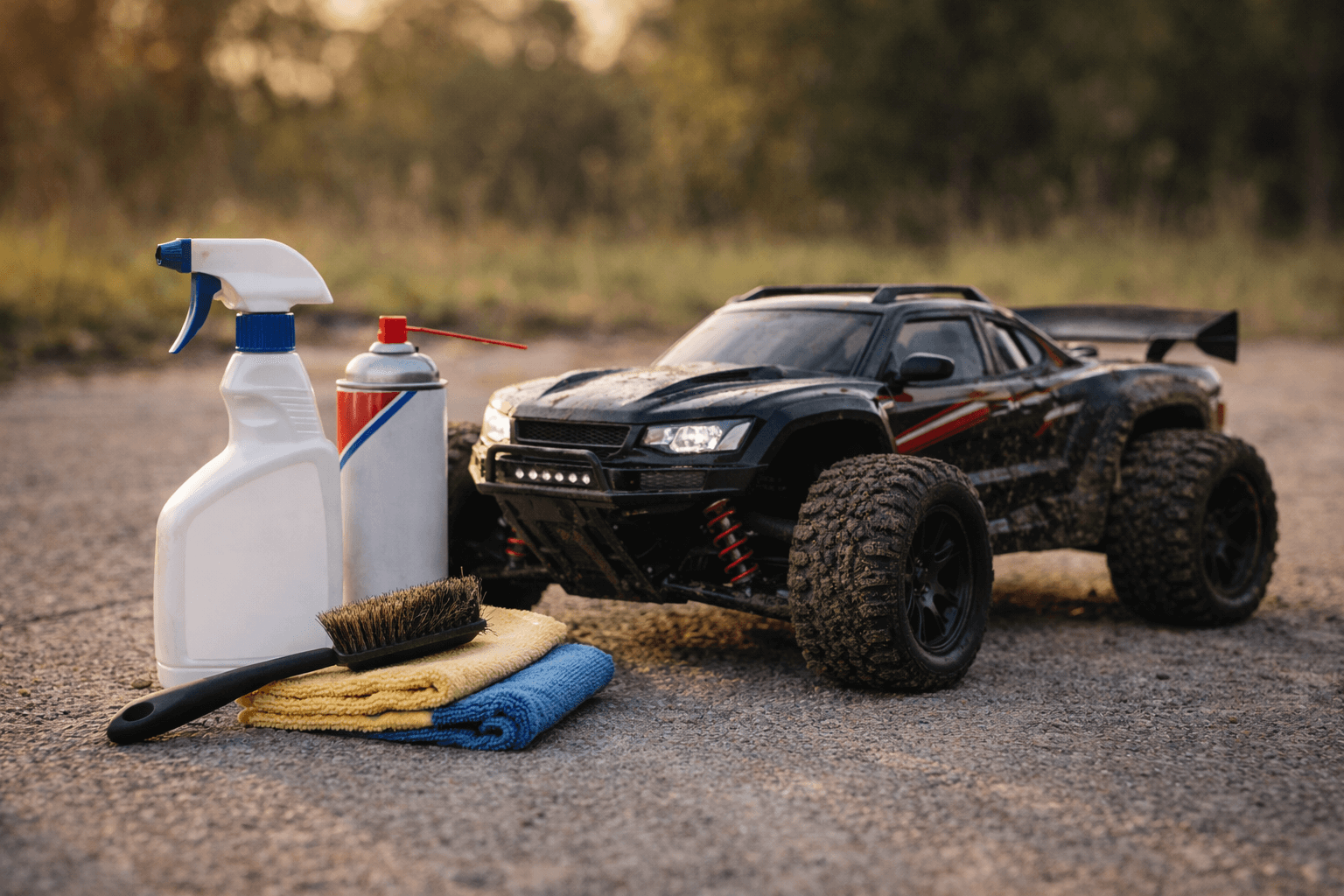
If you prefer a more budget-friendly or customized approach, a DIY cleaning kit works just as well. Many hobbyists put together their own setup using aerosol contact cleaner for electronics, compressed air for drying and dust removal, small brushes for tight areas, microfiber towels for wiping and polishing, and silicone spray for light lubrication after cleaning.
Both options get the job done. The best choice depends on whether you value convenience or prefer building a kit tailored to your specific RC cars and driving style.
How Often Should I Clean My RC Car After Use?
How often you clean your RC car depends on where and how you drive it. Dirt, dust, and moisture all speed up wear, especially in moving parts.
|
Driving type |
Recommended cleaning frequency |
|---|---|
|
Indoor or on-road |
After every 3 to 4 runs |
|
Outdoor in dry conditions |
After every 1 to 2 runs |
|
Off-road, wet, or muddy |
After every run |
Regular cleaning helps you spot early wear, loose screws, or damaged parts before they turn into bigger problems. It also reduces stress on drivetrain components and helps prevent rust or corrosion.
Even a quick five-minute post-run wipe-down can make a noticeable difference in performance and longevity.
Conclusion
RC cars are built to handle hard driving, jumps, and rough terrain, but regular cleaning is what keeps them running smoothly over time. Dirt and grime wear parts down faster, and the wrong cleaner can cause more damage than the mess itself.
Using the best cleaner for RC cars helps protect electronics, chassis components, and painted finishes while keeping performance consistent. Contact-safe cleaners for electronics and mild solutions for plastics and metal go a long way.
Starting with hobby-approved options like Maxima Contact Cleaner or WD-40 Specialist is a smart move. If you clean often, upgrading to a complete RC cleaning kit can make maintenance faster, easier, and more consistent after every run.
Protect your investment. Clean it right.
FAQ
What is the best cleaner for RC cars?
Contact-safe cleaners like Maxima Electrical Contact Cleaner or WD-40 Specialist Contact Cleaner are excellent for electronics. For plastic parts and chassis areas, diluted Simple Green is a reliable option.
Is it safe to use water on RC car electronics?
No. Water can damage ESCs, receivers, and servos. Use compressed air or a contact-safe cleaner unless the components are clearly marked as waterproof.
Can I use household cleaners on my RC car?
Yes, but only mild and diluted ones. Avoid bleach, acetone, strong solvents, and aggressive degreasers that can damage plastics and finishes.
How do I clean off mud and dirt?
Start by brushing off heavy chunks, then lightly rinse non-electronic parts. Finish with contact cleaner, compressed air, and microfiber towels to remove moisture and residue.
Are there cleaning kits made for RC cars?
Yes. Brands like CowRC offer full cleaning and maintenance kits designed specifically for RC plastics, metal parts, and electronics.